From Breguet to Pennsylvania: America’s First Serial Tourbillon
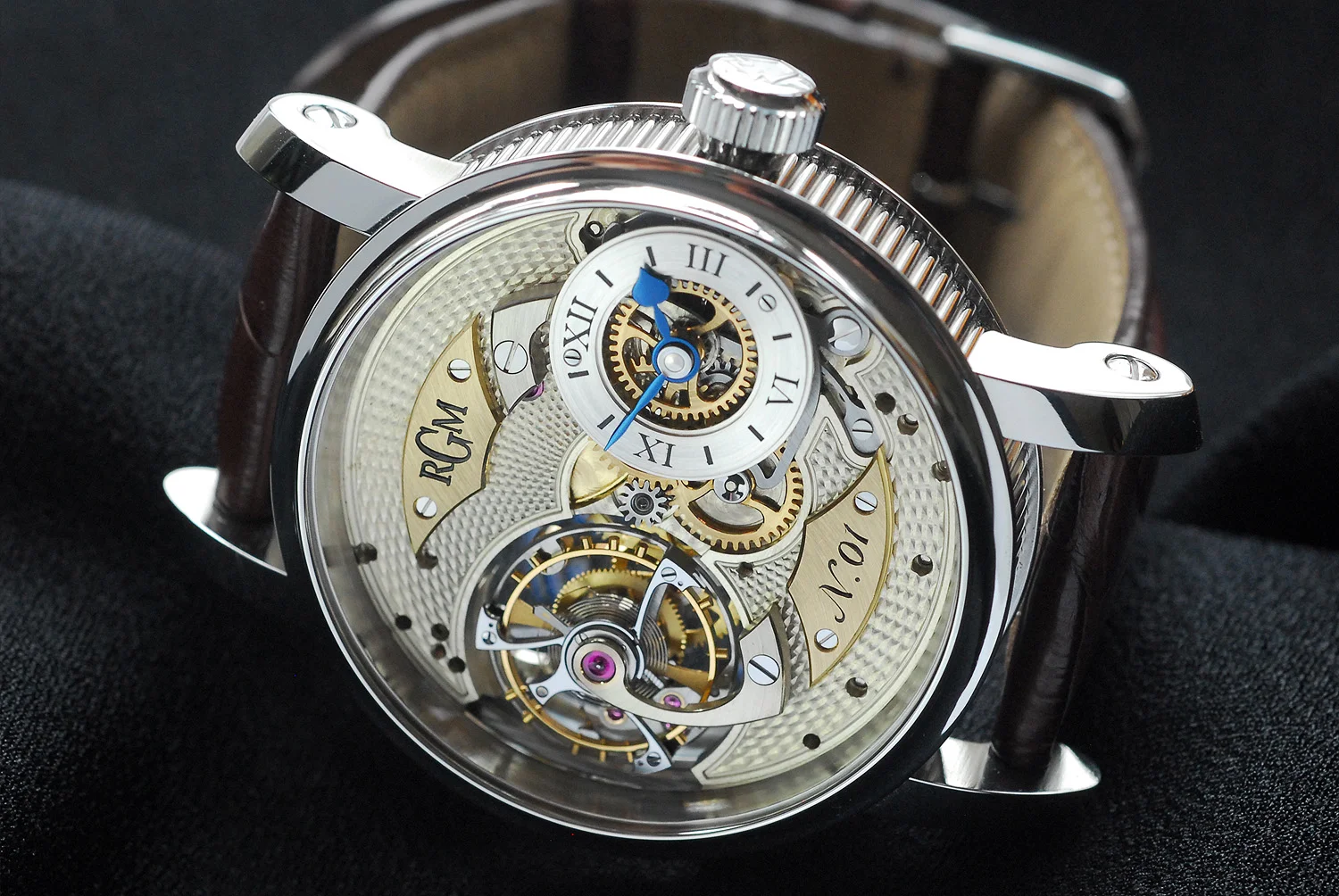
Luxury watch company RGM is well known in the world of horology. They are arguably the most prestige American watchmaking company in the United States. They not only design and assemble luxury watches, but also build the cases, parts, and movements, including the only serial tourbillon in American history.
RGM was founded by master watchmaker Roland G. Murphy, who began his watchmaking journey in high school, later went to Bowman Technical School in Pennsylvania, and honed his knowledge and skills further at the highly respected WOSTEP program in Switzerland.
Murphy gained real-world experience working for Hamilton Watch Co., advancing to the level of Technical Director of product development. In 1992, he launched RGM to fulfill his vision of creating fine mechanical timepieces in the U.S.A.
This vision led to the first serially produced tourbillon wristwatch ever made in America.
What is a Tourbillon?
A mechanical watch keeps time using a balance wheel that steadily swings back and forth, regulating the release of energy from the mainspring. This wouldn’t be a problem if a watch stayed in the same position. But, of course, that’s not realistic. All day long, your watch is moving around. It could be face up, face down, or vertical, meaning that gravity is pulling on the balance wheel inconsistently, causing tiny timing errors that add up over the course of a day.
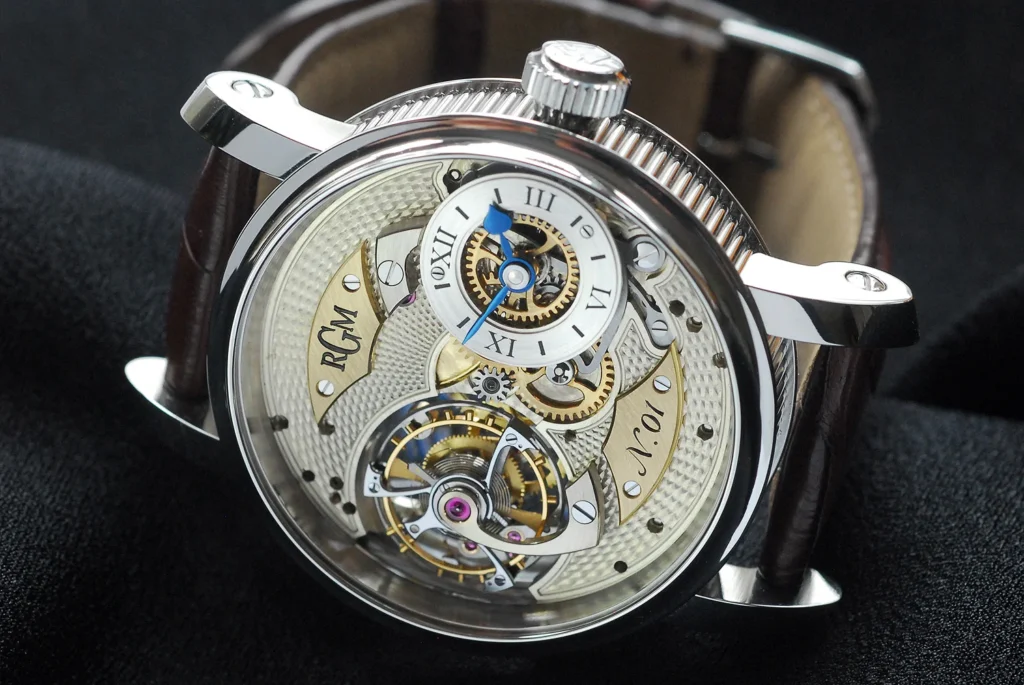
Enter French watchmaker extraordinaire Abraham-Louis Breguet, who in 1795 came up with the idea of mounting the entire balance wheel and escapement inside a rotating cage that spins continuously, carrying the balance through every position in a full circle. This averages out gravity’s effect rather than letting it concentrate in one spot. Breguet named this invention the tourbillon (French for “whirlwind”) and received a patent for it in 1801.
Although it was genius, the tourbillon is actually one of the hardest complications to build. The cage has to be light enough not to drag on the movement’s power reserve, yet precise enough that its own rotation doesn’t introduce new errors. Making one by hand, with hand-finished components, is considered the pinnacle of high watchmaking skill. In fact, Breguet only made a few timepieces with tourbillons over the ten years he held the patent.
Today, independent watchmakers here and there make one-off tourbillons as showpieces, but RGM is the first American watchmaker to turn it into a repeatable, in-house product.
The RGM Pennsylvania Tourbillon
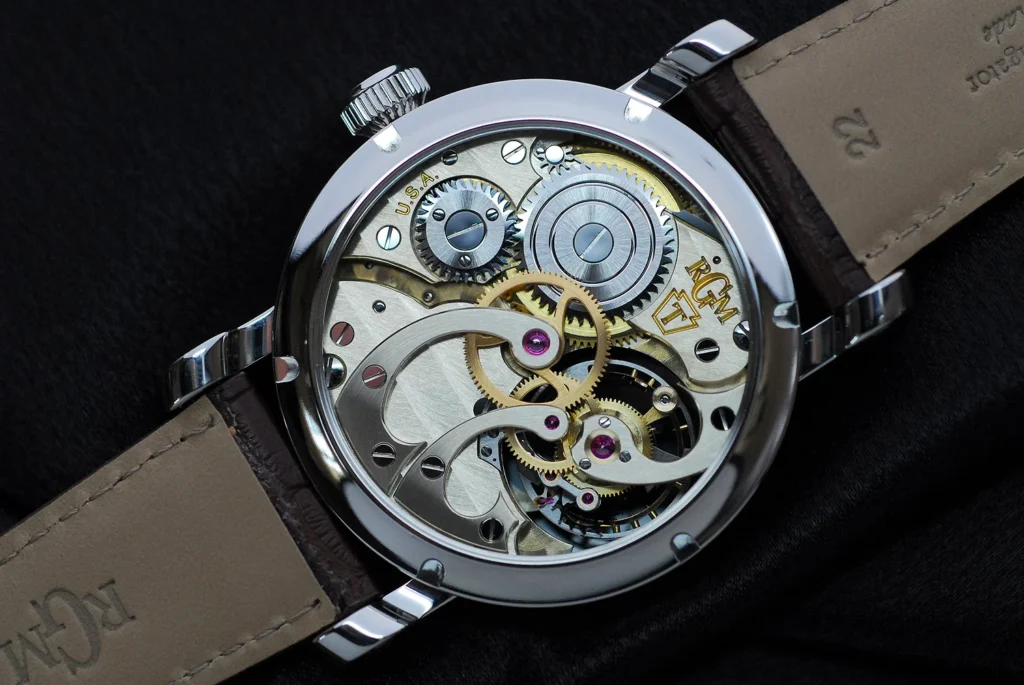
The Pennsylvania Tourbillon houses one of the largest tourbillon cages fitted to a watch of this size, inside a case that measures 43.3mm wide and 13.5mm thick. The case is polished stainless steel with a sapphire crystal front and back. It also includes a small curved sapphire window on the case side, so you can catch a third angle on the spinning cage, in addition to the views through the dial and caseback.
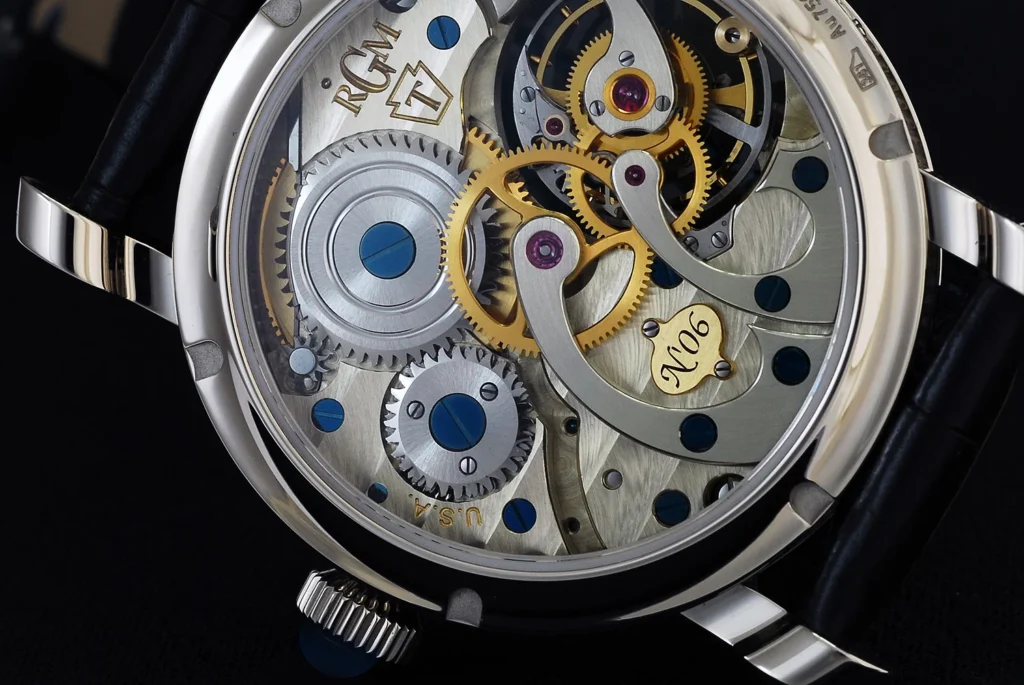
The movement is entirely in-house and roughly 90% made in America. It’s hand wound, runs at 18,000 vph, and is built from German silver, a traditional watchmaking material prized for its color and the way it ages. It’s finished with wolf’s tooth winding wheels, a distinctive 7-tooth winding click, hand-cut guilloché on the main plate, Côte de Genève striping, perlage, and anglage on the edges. A keystone marked with a capital T, a nod to Pennsylvania’s nickname as the Keystone State, identifies these as the first serially produced American tourbillons.
RGM builds this watch only in a small numbered series, plus custom orders. If you like, you can have it in stainless steel or 18k gold, or even platinum on request. In steel, it’s priced at $125,500.
Conclusion
An American-made tourbillon is a huge achievement. Roland Murphy and his team aren’t just sourcing a Swiss tourbillon module and adding some domestically sourced parts. They’re creating the entire caliber itself in Lancaster County, a place of rich watchmaking history. Sure, it’s a very expensive and complicated timepiece, but it’s evidence that the skills needed to build one of the hardest complications in mechanical watchmaking never really left America. RGM just had to prove it could still be done.